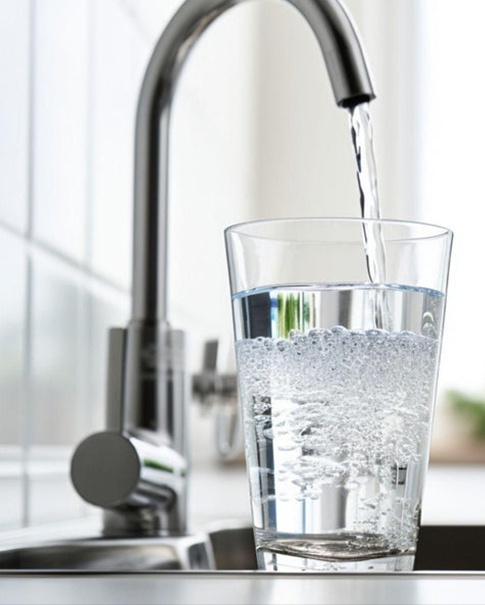
Pourquoi mon eau potable a-t-elle un goût différent ?
Jul 10, 2026Avez-vous déjà remarqué que le goût de votre eau potable change d'un jour à l'autre ?
Peut-être qu'elle dégage soudainement une légère odeur de chlore. Peut-être qu'elle a un goût un peu métallique, fade, ou tout simplement moins rafraîchissant que d'habitude. Dans bien des cas, l'eau paraît encore parfaitement limpide, ce qui peut rendre le changement encore plus déroutant.
La bonne nouvelle, c'est qu'un changement de goût ne signifie pas forcément que votre eau est impropre à la consommation. Le goût de l'eau potable peut varier pour de nombreuses raisons, notamment les changements de saison, les procédés de traitement, la plomberie domestique et même la température. Comprendre ces facteurs vous permettra de faire des choix éclairés pour améliorer votre expérience quotidienne.
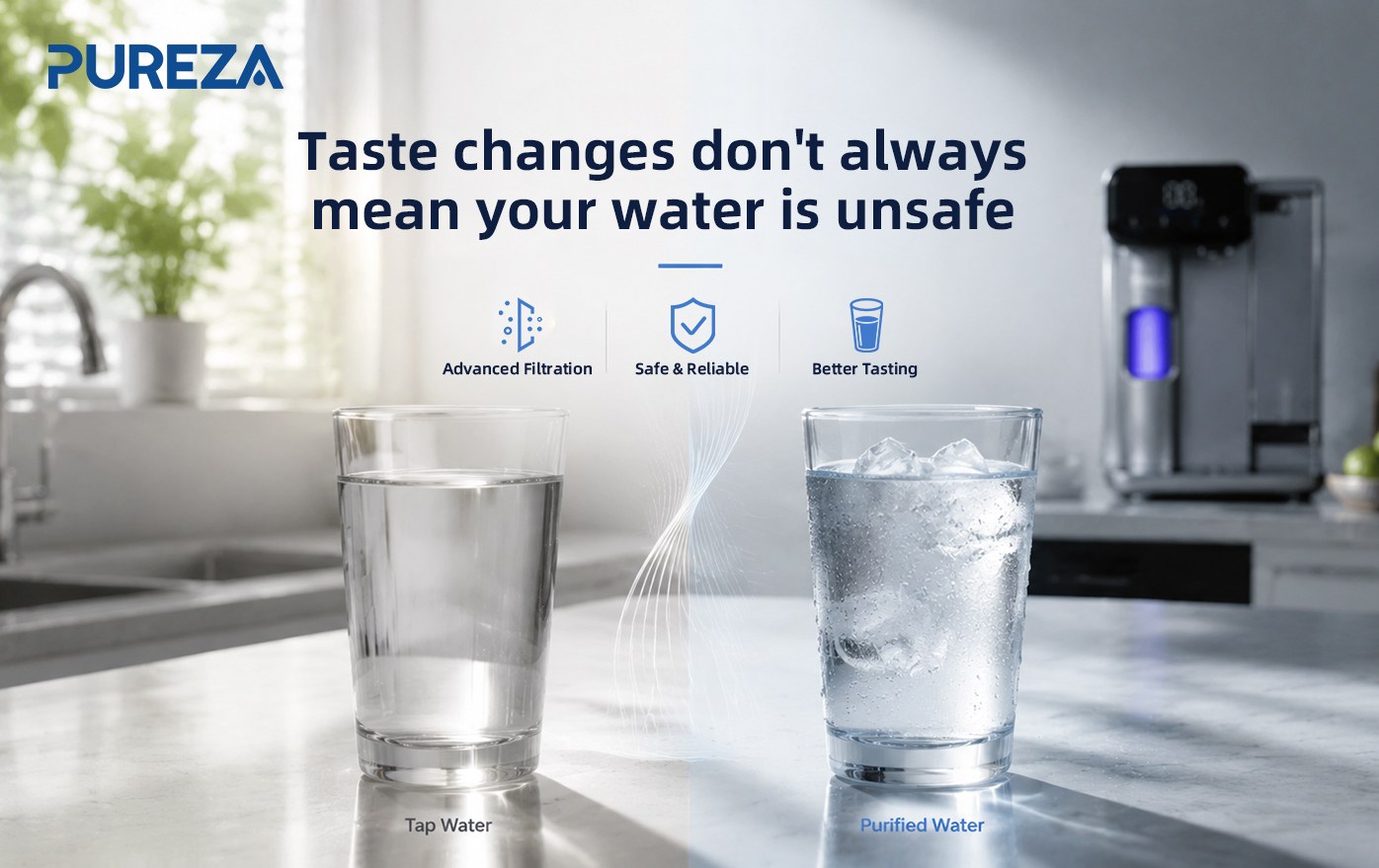
Pourquoi le goût de l'eau change-t-il ?
Traitement au chlore et à l'eau
L'une des causes les plus fréquentes des changements de goût de l'eau est la présence de chlore.
Les services municipaux de distribution d'eau utilisent du chlore et des désinfectants apparentés pour protéger la santé publique en empêchant la prolifération de micro-organismes nuisibles lors du traitement et de la distribution. Bien que ces désinfectants soient considérés comme sûrs aux concentrations réglementées, ils peuvent laisser un goût ou une odeur perceptible que certaines personnes trouvent désagréable.
L'intensité du goût de chlore peut varier tout au long de l'année. Durant les mois chauds, les variations de la demande en eau, de la température et des méthodes de traitement peuvent rendre le chlore plus perceptible pour les consommateurs sensibles.
Minéraux et plomberie
Les minéraux naturellement présents peuvent également influencer le goût de l'eau potable.
Le calcium et le magnésium peuvent donner un léger goût crayeux, tandis que le fer peut parfois produire un goût métallique. Dans les bâtiments anciens, la plomberie peut également contribuer à des changements de goût, surtout si l'eau a stagné dans les canalisations pendant une longue période.
C’est l’une des raisons pour lesquelles le premier verre d’eau du matin peut avoir un goût différent de celui de l’eau bue plus tard dans la journée.
Changements saisonniers
Beaucoup de gens sont surpris d'apprendre que les sources d'eau peuvent changer tout au long de l'année.
Des facteurs tels que les précipitations, le niveau des réservoirs et les ajustements du traitement de l'eau peuvent légèrement affecter le goût et l'odeur de l'eau potable, même lorsqu'elle continue de respecter toutes les normes de qualité applicables.
Pour la plupart des consommateurs, ces changements sont sans conséquence, mais ils peuvent tout de même affecter la satisfaction globale liée à la consommation d'alcool.
Pourquoi la température est plus importante que vous ne le pensez
Quand on parle d'eau au meilleur goût, on se concentre souvent exclusivement sur la filtration. Pourtant, la température joue un rôle étonnamment important dans la perception du goût de l'eau.
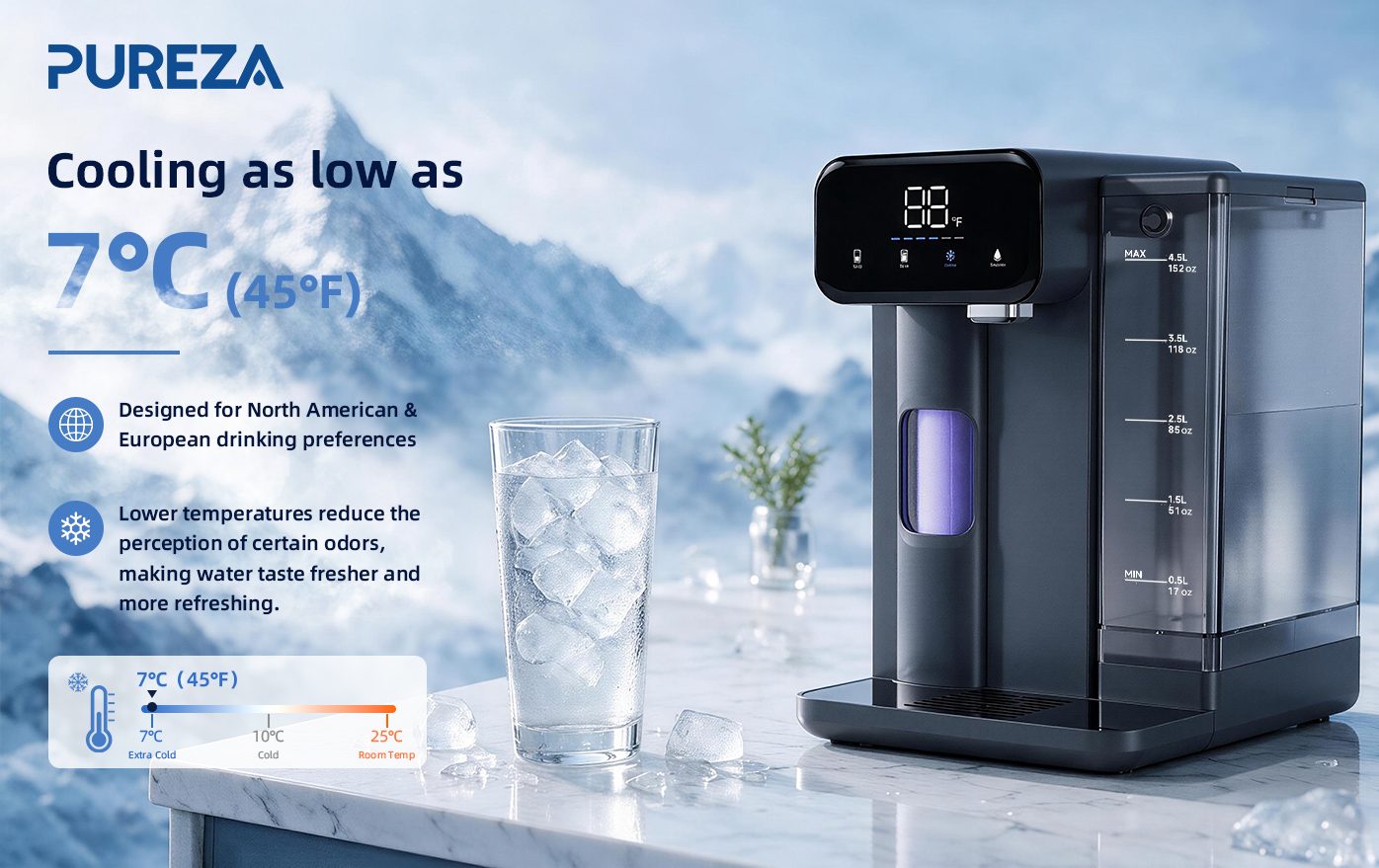
L'eau froide a généralement un goût plus pur et plus rafraîchissant, car les basses températures atténuent la perception de certaines odeurs et saveurs. C'est pourquoi beaucoup de gens préfèrent l'eau fraîche, surtout par temps chaud ou après un effort physique.
En réalité, deux verres d'eau de qualité identique peuvent offrir des expériences de dégustation très différentes simplement parce que l'un est plus froid que l'autre.
Face à l'évolution constante des attentes des consommateurs, de nombreux ménages recherchent des solutions alliant purification de l'eau et performance de refroidissement efficace. Système de filtration d'eau de comptoir PU-T02Conçues spécifiquement pour les habitudes de consommation d'eau nord-américaines et européennes, elles peuvent fournir de l'eau fraîche à des températures aussi basses que 7°C (45°F), offrant une expérience nettement plus rafraîchissante que de nombreux appareils de comptoir classiques qui ne refroidissent qu'à environ 10 °C (50 °F).
Pour les familles qui consomment fréquemment de l'eau fraîche, cette différence peut être étonnamment perceptible au quotidien.
Améliorer le goût grâce à une meilleure filtration
Si la température améliore l'expérience de dégustation, la filtration s'attaque aux causes profondes des goûts et des odeurs indésirables.
Les technologies de filtration modernes sont conçues pour réduire un large éventail de contaminants susceptibles d'affecter la qualité de l'eau et la confiance des consommateurs. Un exemple est technologie de membrane chargée positivement, qui combine la filtration physique et l'attraction électrostatique pour cibler un large spectre d'impuretés.
Avancé distributeur d'eau froide de comptoirCette approche permet de réduire la teneur en chlore, PFAS, BPA, plomb, résidus pharmaceutiques, microplastiques et particules aussi petites que 0,5 micron. Elle permet également de réduire efficacement les micro-organismes, notamment les bactéries et les virus, contribuant ainsi à améliorer la qualité et le goût de l'eau.
Pour les consommateurs, le résultat est souvent immédiatement perceptible : une eau au goût plus frais, à l’odeur plus pure et plus agréable à boire tout au long de la journée.
La commodité favorise une meilleure hydratation
Même le système de filtration le plus efficace aura une utilité limitée si les gens le trouvent difficile à utiliser.
Les systèmes traditionnels sous évier peuvent nécessiter une installation professionnelle, des modifications de la plomberie et un entretien régulier. Pour les locataires, les bureaux ou les consommateurs qui privilégient une solution plus simple, ces exigences peuvent constituer un frein à leur adoption.
C’est l’une des raisons pour lesquelles les systèmes de purification d’eau sur comptoir sont devenus de plus en plus populaires ces dernières années.
Avec un conception prête à l'emploiLes utilisateurs peuvent ainsi profiter d'eau purifiée et réfrigérée sans modifier la plomberie existante. Purificateurs d'eau froide de comptoir Les appareils fonctionnant sans produire d'eaux usées séduisent également les consommateurs soucieux de l'environnement qui souhaitent éviter une consommation d'eau inutile.
En simplifiant l'installation et en réduisant les problèmes de maintenance, ces solutions permettent d'intégrer plus facilement de meilleures habitudes d'hydratation dans le quotidien.
Quand faut-il s'inquiéter du goût de l'eau ?
La plupart des changements de goût de l'eau potable sont liés aux procédés de traitement, à la température, aux minéraux ou à l'état de la plomberie et n'indiquent pas un problème de sécurité.
Toutefois, si l'eau développe une odeur inhabituelle persistante, devient trouble, change de couleur ou subit une modification soudaine et importante de sa qualité, il peut être judicieux de contacter votre service local des eaux ou de faire analyser l'eau pour une évaluation plus approfondie.
Cependant, dans de nombreux cas, améliorer la filtration et la température de l'eau potable peut considérablement améliorer l'expérience globale sans nécessiter de modifications majeures du système d'eau de votre maison.
Une meilleure eau commence par une meilleure filtration.
Une eau au goût différent n'est pas toujours la cause de problèmes de santé.C’est inquiétant, mais c’est souvent le signe que quelque chose a changé dans l’expérience de boire.
Des facteurs tels que le chlore, les minéraux, les variations saisonnières et la température peuvent tous influencer le goût de l'eau. En comprenant ces facteurs et en choisissant judicieusement, vous pouvez mieux contrôler le goût de l'eau.Grâce à des solutions de filtration efficaces, les consommateurs peuvent profiter chaque jour d'une eau plus propre, plus fraîche et plus agréable.
Alors que la demande en solutions d'eau potable pratiques et performantes continue de croître, systèmes de purification de comptoir Ces systèmes, qui combinent une filtration avancée et des capacités de refroidissement en profondeur, permettent aux ménages de profiter d'une meilleure expérience de consommation d'eau, sans installation compliquée ni gaspillage d'eau.