When Clear Water Isn’t Necessarily Clean
In everyday life, we often judge drinking water by what we can sense—clarity, taste, and smell.
Yet as water quality research advances, a new category of contaminants has gained attention: microplastics. Invisible to the naked eye, they do not cloud water or immediately alter its taste, but they can persist and enter the human body through routine water consumption.
This growing awareness is prompting a fundamental question: Does “clean” water mean the same thing today as it did before?
What Are Microplastics—and Why Are They Hard to Detect?
Microplastics are extremely small plastic particles, typically less than 5 millimeters in size. Many are microscopic and can only be identified through laboratory analysis.
Unlike visible sediments such as sand or rust, microplastics do not settle easily and are not detectable through taste, smell, or appearance. They can remain suspended in water and move through water treatment and distribution systems.
Their invisibility is precisely what makes them easy to overlook.
How Microplastics Enter the Environment
Microplastics are not created overnight. They originate from everyday processes—the gradual breakdown of plastic products, the release of synthetic fibers during washing, and the long-term degradation of plastic materials in industrial and urban environments.
Over time, these particles enter natural water systems and circulate widely. They are a byproduct of modern life rather than the result of a single source.
From Natural Waters to the Tap
Even with centralized water treatment, not all microplastics are completely removed. Depending on water sources and treatment methods, some particles may remain present in drinking water. This does not imply immediate danger, but it highlights an important reality: the standards by which we evaluate drinking water safety are evolving.
What Happens After Ingestion?
Scientific research on the health effects of microplastics is ongoing. What is currently understood is that microplastics can enter the body through drinking water, and the long-term effects of continuous low-level exposure are still being studied.
In this context, reducing exposure where possible is widely viewed as a prudent approach.
Practical Ways to Reduce Microplastics in Drinking Water
While complete elimination may not always be possible, appropriate water treatment technologies can significantly reduce microplastics and other contaminants.
Modern filtration systems often combine multiple mechanisms to address microplastics, larger particles, residual chlorine, PFAS, VOCs, and compounds that affect taste and odor—providing a more comprehensive approach to drinking water quality.
Beyond Filtration: Safe Water, Perfectly Tailored
For many households, drinking water is no longer just about safety—it’s also about daily comfort and convenience. As microplastics and other tiny contaminants continue to appear in water, traditional drinking methods can no longer fully meet modern families’ expectations for clean, safe water.
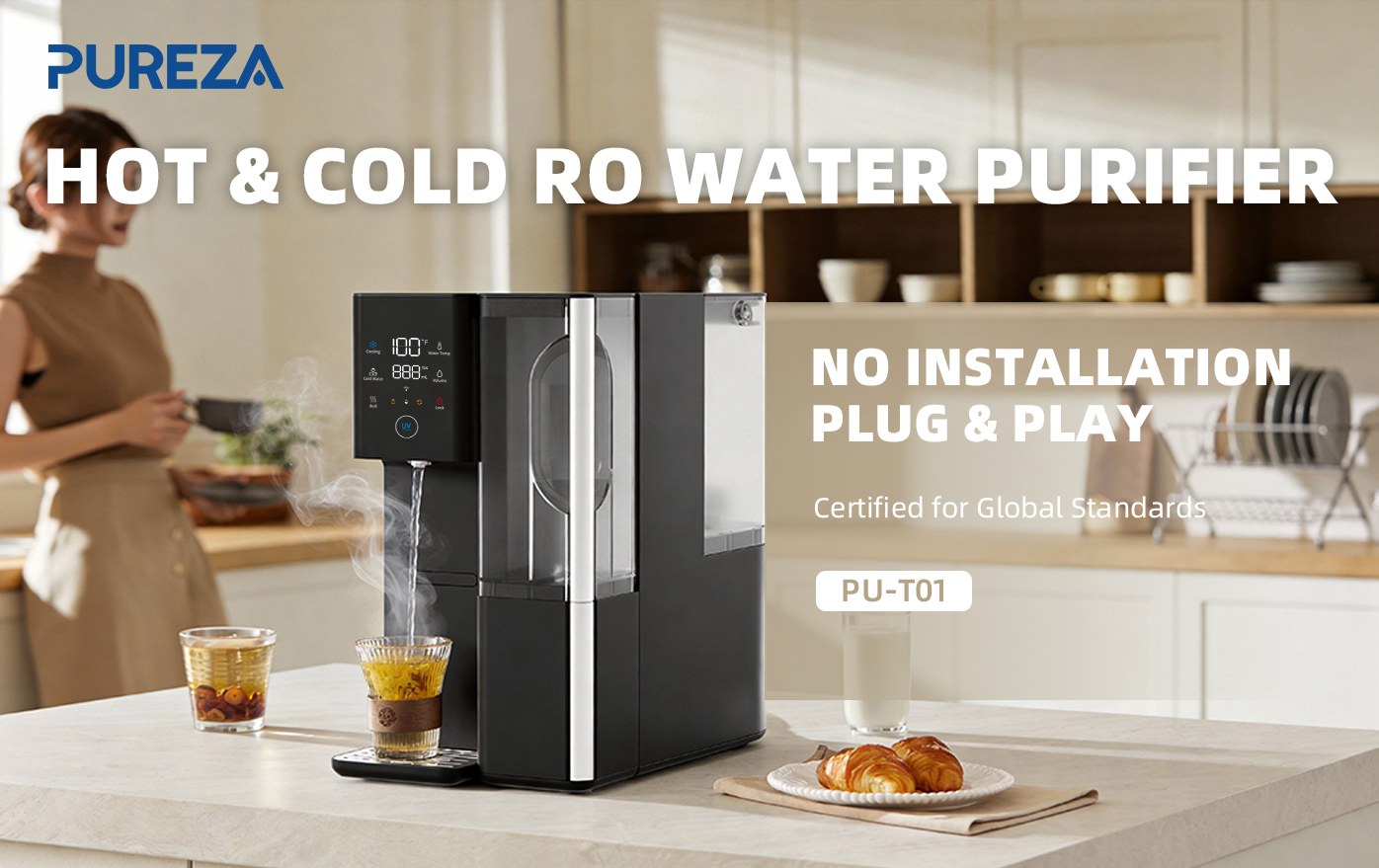
In this context, the countertop RO water dispenser has emerged as an ideal solution. It effectively reduces exposure to microplastics and other contaminants, while offering both hot and cold water, a water-saving design, and versatile usage options—allowing safe drinking water and a comfortable experience to coexist.
Designed for Everyday Drinking
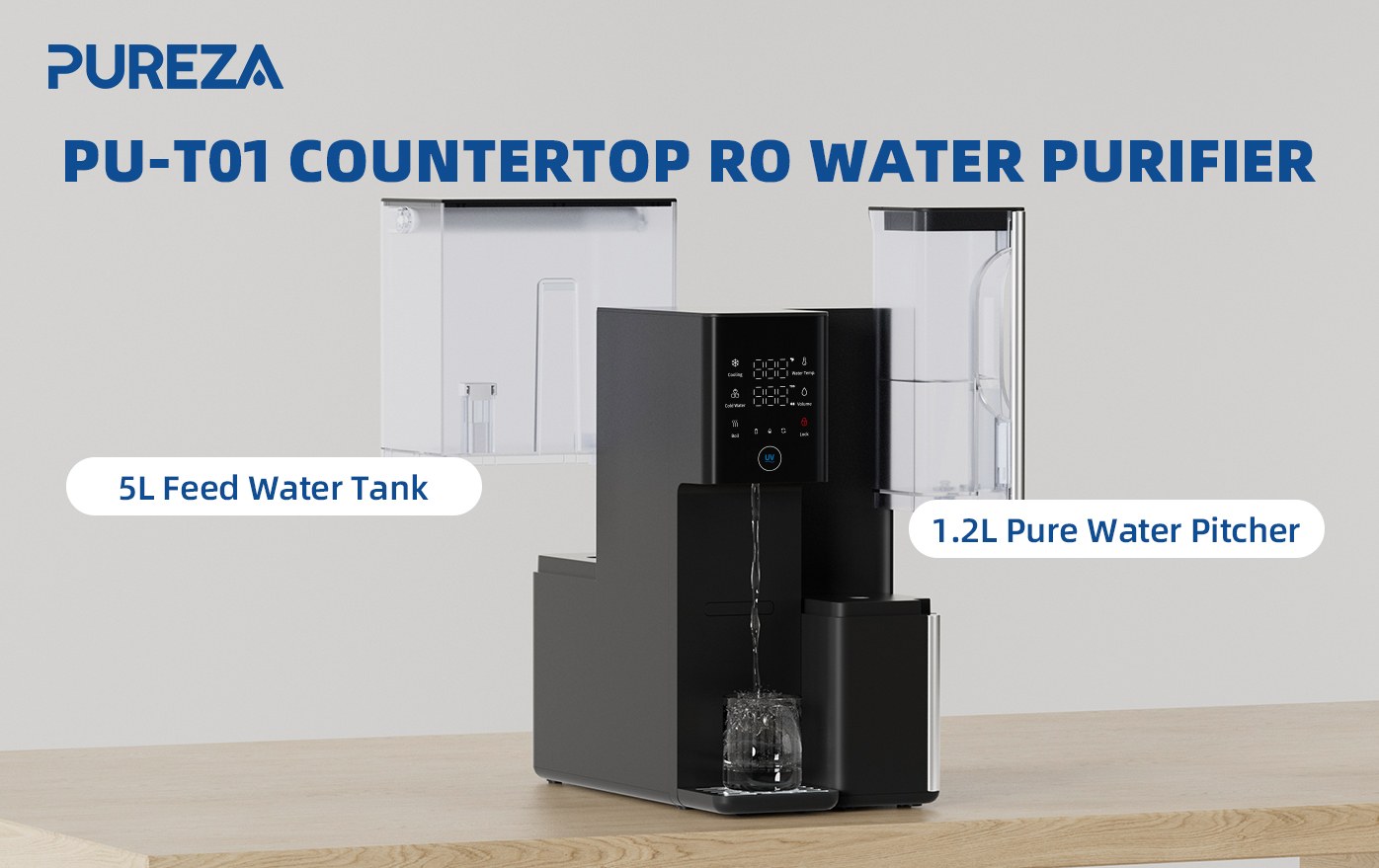
The PU-T01 reverse osmosis water filtration system features an advanced 0.00001-micron RO membrane and a 5-layer filtration system, effectively removing total dissolved solids (TDS), PFOS, PFBS, chlorine, salts, sediments, lead, and odors. Whether for daily drinking, cooking, or preparing beverages, it ensures every sip is safe and pure.
The countertop reverse osmosis water purifier supports both hot and cold water, with 6 temperature settings and 4 volume options, easily accommodating different usage scenarios. Whether preparing hot tea, coffee, or a refreshing glass of cold water, users can precisely control both temperature and volume.
Notably, the PU-T01 countertop reverse osmosis system features a 3:1 pure-to-waste water ratio, offering significant water-saving advantages compared to traditional systems. With OEM/ODM customization options, it can be tailored to homes, offices, or commercial spaces to meet unique requirements.
Seamless Combination of Filtration and Comfort
Hot and cold water options: drink at the temperature you prefer
Adjustable temperature and volume settings: compatible with various cup sizes and consumption needs
High-efficiency RO filtration: significantly reduces microplastics, TDS, and other contaminants
Water-saving design: 3:1 pure-to-waste ratio, environmentally friendly and cost-efficient
Moreover, the reverse osmosis dispenser is user-friendly and easy to maintain, combining flexibility and reliability for daily household use. Safe drinking water becomes not just a concept, but a seamless part of everyday life.
Making Every Sip Safer
By integrating high-precision RO filtration, hot and cold water supply, adjustable settings, and a water-saving design, the Countertop RO Water Dispenser addresses the potential risks of microplastics while providing a comfortable and convenient drinking experience, ensuring safer water for homes, offices, and everyday settings.



Ningbo Pureza Technology
Téléphone : +86 19880967823
Whatsapp : +86 19880967823
E-mail : Ajay@pureza.com.cn