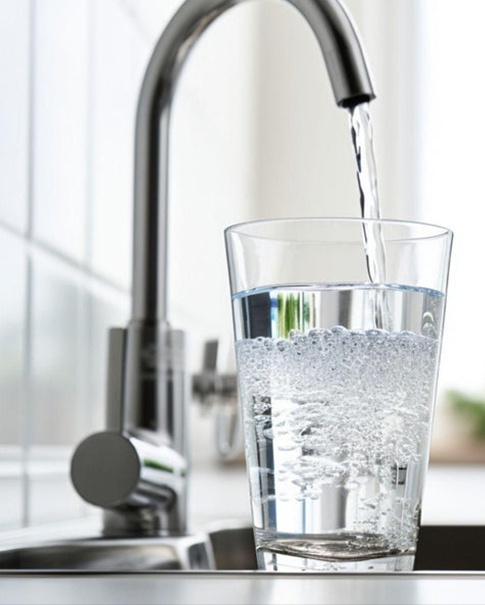
Clean drinking water is something most of us take for granted. We turn on the tap, fill a glass, and assume it’s safe. But in recent years, scientists and regulators have raised alarms about a group of contaminants that are often invisible, persistent, and surprisingly widespread: PFAS.
Often called “forever chemicals,” PFAS have been detected in tap water systems around the world. Understanding what they are—and how to reduce exposure—has become an important part of protecting both human health and the environment.
What Are PFAS and Why Should You Care?
PFAS stands for Per- and Polyfluoroalkyl Substances, a large family of synthetic chemicals that have been used since the mid-20th century. Their unique chemical structure makes them extremely resistant to heat, water, and oil.
That resistance is exactly why PFAS became popular in products like:
· Non-stick cookware
· Water- and stain-resistant fabrics
· Food packaging
· Firefighting foams
The problem? These same properties also mean PFAS do not break down easily in nature or in the human body. Once they enter water systems, they can remain for decades.
You should care because drinking water is one of the most common exposure pathways. Even low levels of PFAS, consumed over long periods, may accumulate in the body.
The History of PFAS: From Innovation to Contamination
When PFAS were first developed, they were seen as a major technological breakthrough. Their durability and stability made modern conveniences possible, from safer firefighting methods to more efficient food packaging.
For decades, little attention was paid to what happened after these chemicals were released into the environment. Over time, industrial discharge, improper waste handling, and runoff allowed PFAS to seep into:
- Groundwater
- Rivers and lakes
- Municipal water supplies
What began as innovation slowly turned into a global contamination issue—one that many communities are only now discovering.
How PFAS Impact the Environment and Human Health
One of the most concerning aspects of PFAS is their persistence.
Environmental Impact
PFAS can travel long distances through water and soil. They accumulate in ecosystems, affecting wildlife and entering the food chain. Because they do not naturally degrade, contamination can continue long after the original source is removed.
Health Concerns
Scientific studies have linked certain PFAS compounds—especially PFOS and PFOA—to potential health risks, including effects on:
- The immune system
- Hormone regulation
- Liver and kidney function
While research is ongoing, health authorities increasingly agree on one point: reducing exposure is a smart precaution.
Why PFAS Are Hard to Remove from Tap Water
Traditional municipal water treatment systems were not designed to handle PFAS. Basic filtration methods may remove sediment or improve taste, but they often do not effectively reduce dissolved contaminants like PFAS.
This is why many households are turning to advanced water filtration systems that target both chemical and particulate pollutants.
The Role of Countertop Water Filtration Systems in Protecting Health
An effective home countertop water dispenser can significantly reduce exposure to PFAS and other unwanted substances—right at the point of use.
Technologies shown to help reduce PFAS include:
· Activated carbon, which adsorbs many organic compounds[2]
· Reverse osmosis (RO), capable of removing extremely small dissolved contaminants[3]
When combined properly, these technologies can also address other common water quality issues, such as chlorine, heavy metals, odors, and high total dissolved solids (TDS).
A Smarter Approach to Everyday Water: PU-T01 Water Purifier
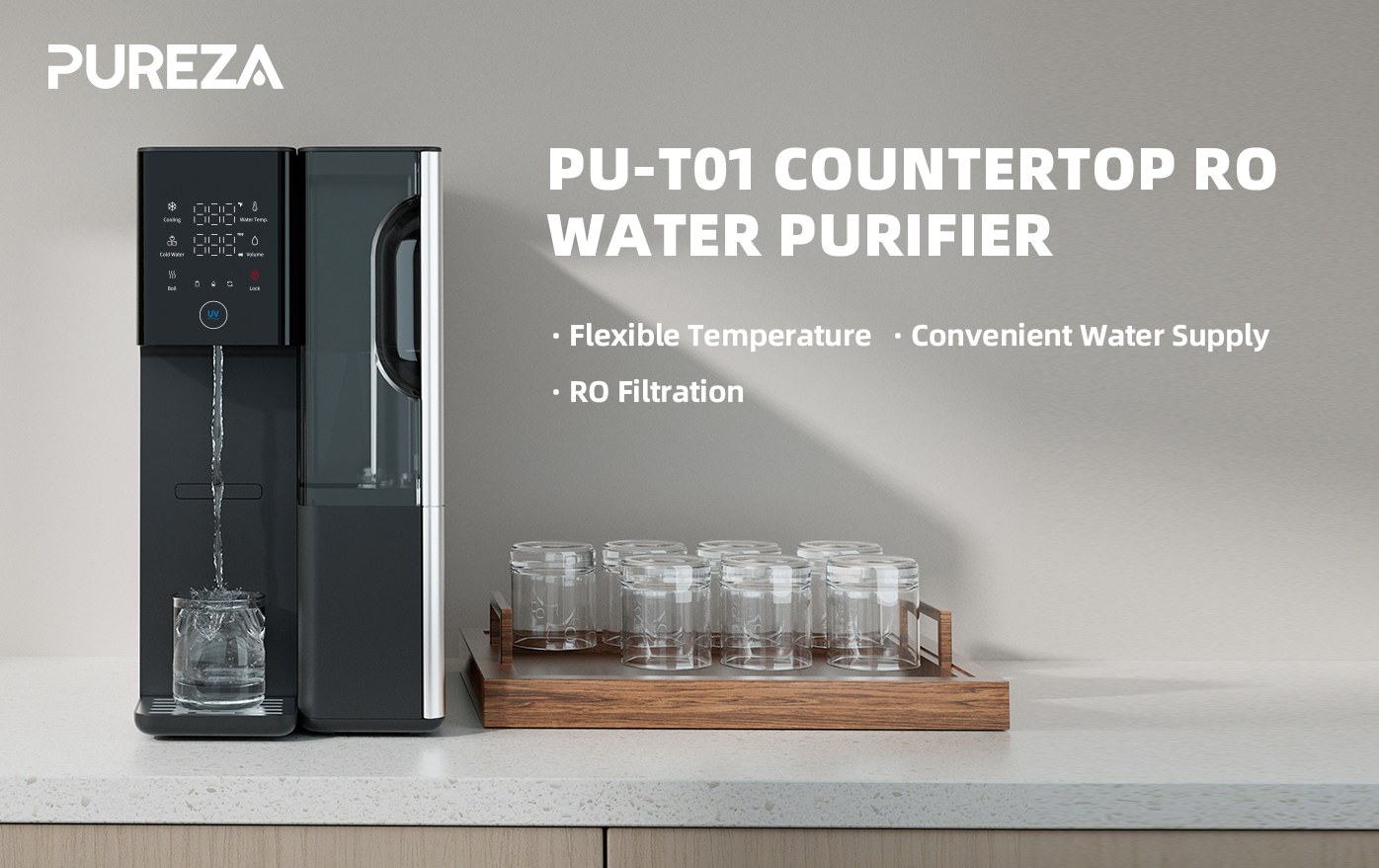
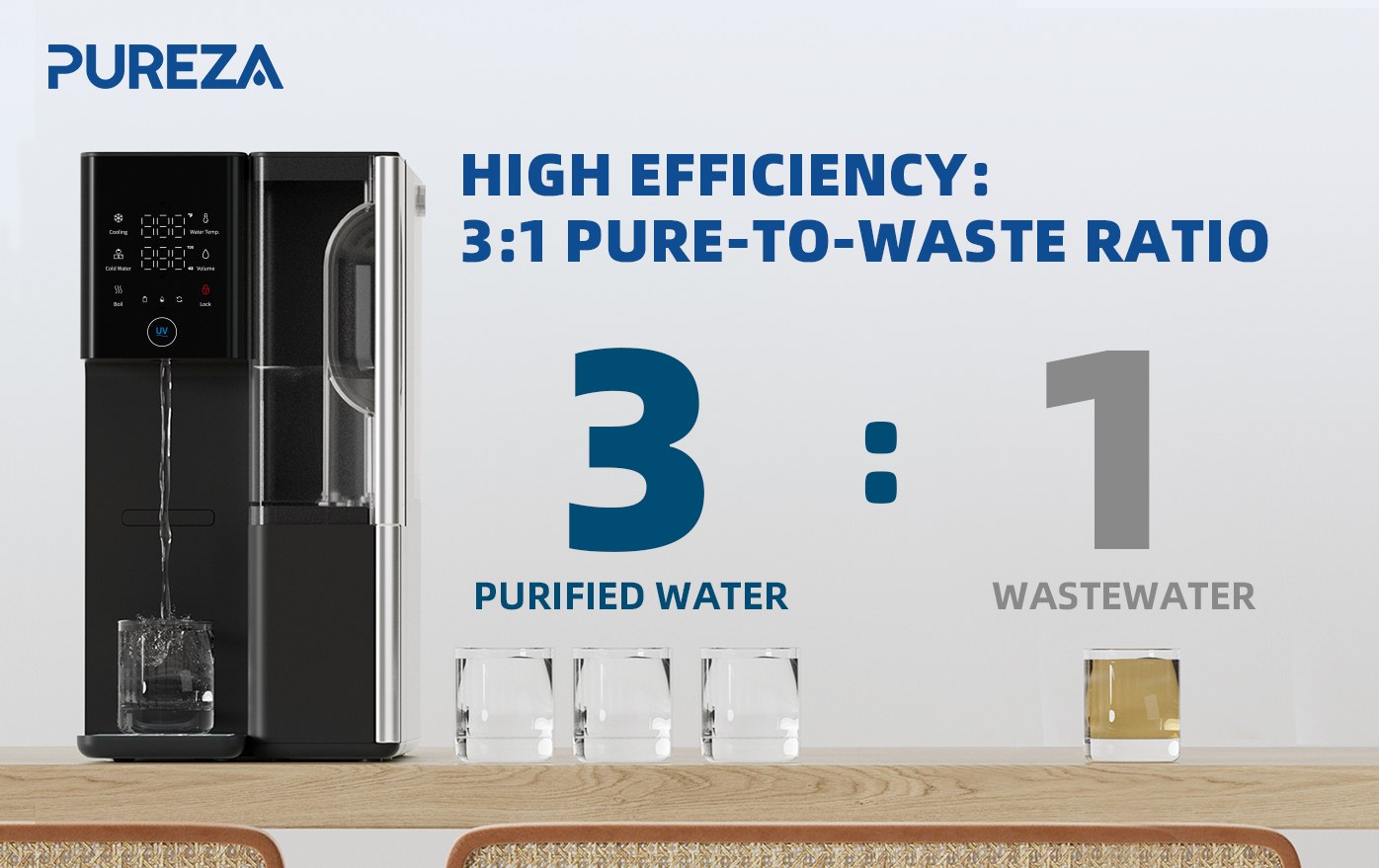
For households looking for both advanced filtration and everyday convenience, systems like the PU-T01 cooling and heating RO water purifier offer a practical solution.
Rather than relying on a single filter stage, the PU-T01 countertop RO water dispenser uses a five-stage filtration structure, including:
· PP sediment filtration
· Activated carbon
· A 0.00001-micron reverse osmosis membrane
· Post-carbon and post-PP polishing stages
This layered approach helps reduce TDS, PFOS, PFOA, chlorine, lead, salts, sediment, and unpleasant odors, delivering water that is cleaner and better tasting.
Designed for daily use, the system features:
- A 5-liter feed water tank and 1.2-liter pure water pitcher
- Multiple water volume options (from small cups to larger fills)
- Adjustable temperature settings for cold, warm, or hot water
An integrated flow-through UV sterilization design further supports hygiene by helping inhibit bacterial growth as water is dispensed—without storing heated water for long periods.
Importantly, all of this happens without complex installation, making advanced water treatment more accessible for modern homes.
Taking Control of Your Drinking Water
PFAS contamination is a complex global issue, but protecting your household doesn’t have to be complicated.
Simple steps can make a meaningful difference:
· Learn what’s in your local water supply
· Choose filtration systems designed for chemical reduction, not just taste improvement
· Maintain filters regularly to ensure consistent performance
· Clean water isn’t just about clarity—it’s about confidence.
Awareness Is the First Line of Defense
PFAS in tap water may be invisible, but their impact is not. From their origins as industrial innovations to their persistence in the environment, these “forever chemicals” have reshaped how we think about water safety.
By understanding the risks and choosing effective filtration solutions——PU-T01 countertop RO water purifier, you can take an active role in reducing exposure—for yourself and your family. After all, better water isn’t a luxury; it’s a foundation for healthier living.
[1] https://www.mdpi.com/2075-1729/15/4/573
[2] https://www.epa.gov/sciencematters/reducing-pfas-drinking-water-treatment-technologies



Ningbo Pureza Technology
Téléphone : +86 19880967823
Whatsapp : +86 19880967823
E-mail : Ajay@pureza.com.cn